
Before knowing about blogging, you need to know ‘’what is a blog?’’ A blog is written webpage content about a specific topic on a website. A blog is a tool to communicate with the target audience. The main purpose of a blog is to educate users about our service or product.
Blogging is the process of writing blogs on a website. It is a method of communication about the business and service or product. A blog is structured web content that answers a specific intent. It includes Headings, Paragraphs, listicles, and CTA’s. The main goal of blogging in digital marketing is to attract the right audience through valuable, search-friendly content, build trust and authority with them, and turn that trust into leads, enrollments, or sales.
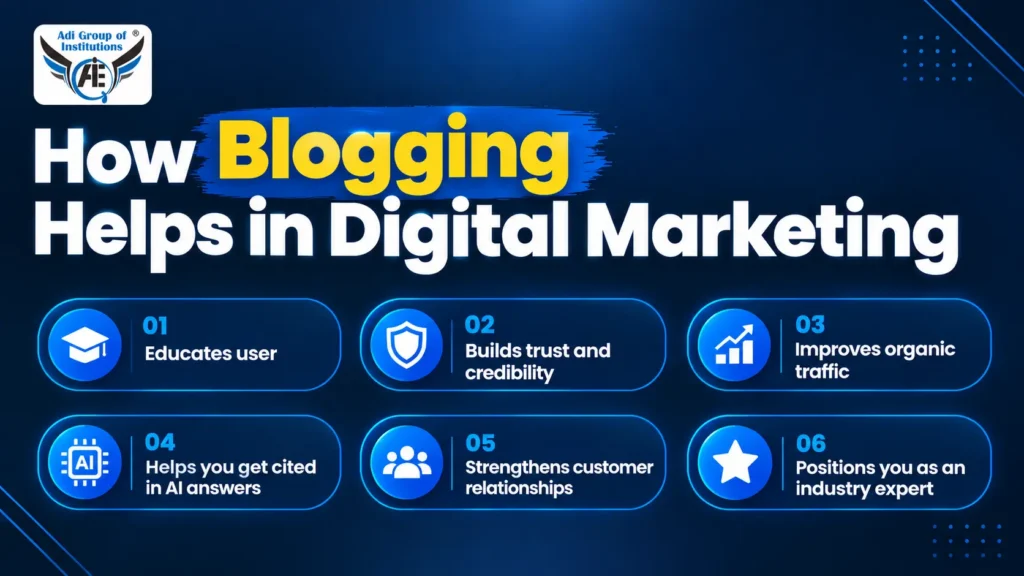
Most buyers research online before they make a decision, and a blog lets you meet them at that exact moment. When you explain concepts, compare options, and answer common questions clearly, you help readers move from confusion to confidence. Educational posts also shorten the sales cycle, because informed users ask better questions and need less convincing. The more useful your answers are, the more likely people are to come back to your site.
People trust brands that share real knowledge without pushing a hard sell. Publishing accurate, well-researched, and consistent content shows that your business understands its subject and stands behind what it says. Adding author names, real examples, and updated information strengthens E-E-A-T signals, which matter to both readers and search engines. Over time, this trust makes users more comfortable choosing you over a competitor they have never heard from.
Every blog post is a new page that can rank for a keyword your audience is already searching. By targeting the right search intent and linking related posts together, you can build topical authority and bring in free, long-term traffic. Unlike paid ads, a well-optimised blog post keeps attracting visitors months or even years after it is published. Refreshing older posts regularly helps them hold their rankings and keeps that traffic steady.
AI tools like ChatGPT, Perplexity, and Google AI Overviews pull their answers from clear, trustworthy, well-structured content. Blog posts that give direct answers, use simple headings, include FAQs, and cover a topic in depth are far more likely to be picked up and cited. Being mentioned in these answers puts your brand in front of users who may never scroll through traditional search results. As more people rely on AI for research, this visibility becomes a real competitive advantage.
A blog keeps the conversation going long after a user has visited your site or become a customer. You can use it to solve common problems, share updates, and answer the questions your audience keeps asking. Helpful posts can also be shared through email, social media, and WhatsApp, which keeps your brand present in a natural way. When customers feel supported and not just sold to, they stay loyal and are more likely to recommend you to others.
Consistent, high-quality blogging shows that you understand your field deeply and keep up with changes in it. Sharing original insights, practical tips, and real experience sets you apart from brands that only repeat generic information. Over time, other websites, journalists, and professionals begin to reference your content, which builds authority and earns valuable backlinks. This expert reputation makes every other marketing channel work better, from search rankings to sales conversations.
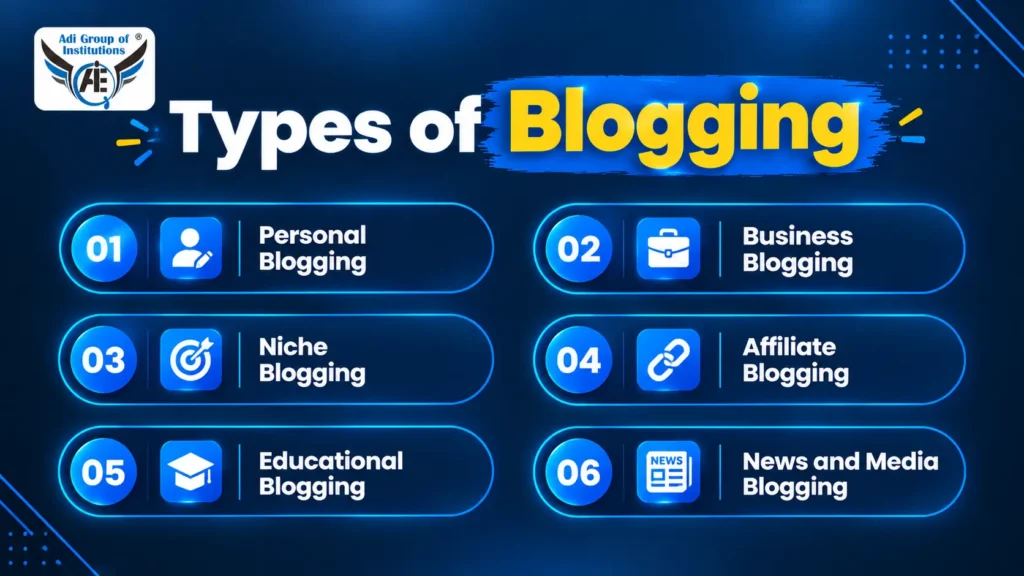
A personal blog is built around your own experiences, opinions, and daily learning. Writers use it to share stories, document a journey, or build an online presence from scratch. It is the easiest type to start because you write about what you already know. Over time, a strong personal blog can grow into a personal brand that opens doors to freelancing, jobs, and collaborations.
A business blog is run by a company to support its marketing goals. It answers customer questions, explains products and services, and attracts potential buyers through search. Done well, it brings in organic traffic, builds trust, and supports leads and sales. This is the most useful type for institutes, agencies, startups, and service providers who want steady, low-cost visibility.
A niche blog focuses on one specific topic, such as digital marketing, personal finance, or career guidance. Because the content stays focused, search engines and readers see you as a specialist in that area. This builds topical authority faster than a blog that covers many unrelated subjects. If you want to rank well and become a trusted source, picking a clear niche is one of the smartest decisions you can make.
Affiliate blogs earn money by recommending products or services and receiving a commission when readers buy through their links. Common content includes product reviews, comparisons, and “best of” lists. The key to success is honesty, because readers quickly lose trust if every post feels like a sales pitch. Always disclose your affiliate links and recommend only what you genuinely believe is useful.
Educational blogs teach readers new skills through guides, tutorials, how-to articles, and explainers. They suit trainers, teachers, institutes, and anyone who enjoys breaking complex topics into simple steps. These posts often perform very well in search and are frequently picked up in featured snippets and AI answers, since they give clear, direct information. They also help readers trust you before they enrol, subscribe, or buy.
News blogs publish timely updates, trends, and analysis about a specific industry or topic. Speed and accuracy matter most here, since readers come for fresh information they can rely on. This type needs a regular publishing schedule and strong fact-checking. When done consistently, it can build a loyal audience and strong authority in your field
Blogging in 2027 rewards honest, experience-based content. Readers have more choices, and search engines and AI answer engines now look for trustworthy sources. Here are 8 practical tips to help you start the right way.
Pick one topic where you have real knowledge or genuine interest, such as digital marketing, finance, or career guidance. Then decide exactly who you are writing for, because a student, a working professional, and a business owner all search differently. Use Google autocomplete, People Also Ask, Reddit, and Quora to find the real questions your audience is asking. A focused niche builds topical authority faster than a blog that covers everything.
Decide why you are blogging. It could be to attract customers, build a personal brand, earn through affiliate links, or support a business. Your goal shapes your topics, your tone, and the calls to action you use. A blog without a goal often loses direction within a few months.
WordPress is still the best option for long-term growth, as it gives you full control over design, speed, and SEO. Choose a short, easy-to-remember domain name that fits your niche, and avoid hyphens and confusing spellings. Invest in reliable hosting, since a slow website hurts both rankings and user experience. Owning your domain is better than building only on free platforms.
Keyword research shows what people are actually searching for. Free tools like Google Search Console and Google Keyword Planner are enough to begin with. Start with low-competition, long-tail keywords such as “how to start a blog for students” instead of broad terms like “blogging”. These are easier to rank for and bring more relevant readers.
Answer the main question early, use simple language, and add real examples, practical steps, and lessons from your own work. Add an author bio, cite reliable sources, and keep your About page clear to strengthen E-E-A-T. Use AI tools only as an assistant for brainstorming and outlining, and always add your own insights and fact-checking. Your genuine experience is what separates your blog from generic AI-written content.
Use one clear H1, logical H2 and H3 headings, short paragraphs, and bullet points where they help. Give a direct answer near the top and include an FAQ section for common questions. This structure makes it easier for Google featured snippets, AI Overviews, ChatGPT, and Perplexity to understand and cite your content. It also helps busy mobile readers scan your post quickly.
Most readers browse on mobile, often on average-speed connections, so use a lightweight theme, compress images to WebP, and avoid heavy plugins. Then build a simple content calendar and publish on a steady schedule, even if it is just one or two quality posts a week. Consistency builds reader trust and tells search engines your site is active. A fast, regularly updated blog keeps visitors coming back.
Share your posts on LinkedIn, X, Reddit, Quora, and WhatsApp communities, and repurpose them into short videos or social posts. Start an email list early, because it is an audience you own regardless of algorithm changes. Set up Google Search Console and GA4 from day one to see which posts get impressions, clicks, and engagement. Use that data to improve older posts and choose better topics going forward.
Start by choosing one niche and knowing who you are writing for. Then set a clear goal, pick a platform like WordPress with a simple domain name, and do keyword research using free tools like Google Search Console and Google Keyword Planner. After that, publish your first post and share it on LinkedIn, Quora, or WhatsApp communities.
Most new blogs take a few months of regular publishing before they see steady traffic. The timeline depends on your niche, competition, and content quality. Targeting low-competition long-tail keywords, publishing consistently, and updating older posts can help you see results faster.
Yes, you can. Blogging and SEO do not need coding or a technical degree. If you can research a topic, write in simple language, and follow basic SEO steps, you can learn the rest with practice. A structured digital marketing course can help you learn faster with expert guidance and real projects.
Blogging in 2027 is not about publishing more posts; it is about genuinely useful publishing posts. When you choose a clear niche, set a goal, research keywords, share real experience, and structure your content for both readers and AI answer engines, your blog slowly builds trust and topical authority. Results will not come overnight, and most blogs need a few months of consistent work before the traffic shows, so keep tracking your progress in Google Search Console and GA4, and keep improving your older posts. Joining a digital marketing course in Kerala can help you build these skills faster with expert guidance and real projects.
Don’t wait for the perfect idea or the perfect setup. Pick one question your audience is asking, write the best answer you can, publish it, learn from the data, and repeat. Start your first blog post today.


Adi Institute is a leading educational institution in Kerala, committed to equipping learners with knowledge, skills, and innovation for the future. With experienced educators, modern facilities, and dedication to excellence, it offers a transformative learning experience that inspires growth, confidence, and career success.
Founded in 2014, Adi Group of Institutions offers job-oriented management and technical courses, equipping students with industry-relevant skills and providing 100% job assistance for successful career placement.
| [ninja_form id=2] |
WhatsApp us